Polymers: big molecules made from repeating units.
Polymers (plastics) have a zillion uses.
Question: Why are polymers so useful and versatile?
Answers:
- Many types of polymers exist
- Each type has some useful properties, such as mechanical strength, flexibility, electrical insulation, chemical resistance, or optical clarity.
- Polymer recipes can be customized to get just the right mix of properties for almost any product
- Polymers can be mass produced to make products less expensive than things made from metals, ceramics, or organic materials such as wood
- Polymers are generally lightweight and strong for their weight.
Example Polymer: Polypropylene |
 |
Polypropylene is a type of plastic. Lots of products are made from polypropylene. Here are a few examples:
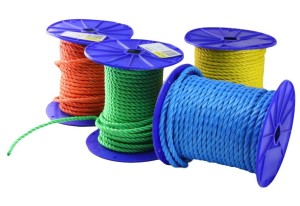 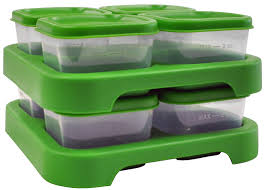 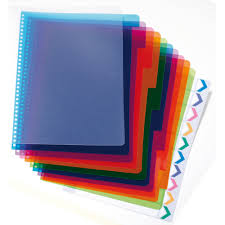 |
Polypropylene is made by combining lots of propylene molecules.(propylene is the same thing as propene)
![\chemname{\chemfig{[,.6]H-C(-[6]H)=C(-[6]H)-C(-[6]H)(-[2]H)-H}}{propylene}](https://www.nemoquiz.com/wp-content/ql-cache/quicklatex.com-610d1735ef75b66bba77f1ffdecefc78_l3.png "Rendered by QuickLaTeX.com")
![\chemname{\chemfig{[,.6]CH_2=CH-CH_3}}{propylene}](https://www.nemoquiz.com/wp-content/ql-cache/quicklatex.com-d6140c9bcdd833bbf1c1326655450111_l3.png "Rendered by QuickLaTeX.com")
Those structures both show the same molecule, but a bent version of polypropylene can help to show how lots of these molecules can chain together:
![\setchemrel{}{}{.8} \chemfig{[,.6]CH(-[6]CH_3)=CH_2} \chemrel{->} \chemfig{[,.6]CH(-[4])(-[6]CH_3)-CH_2(-)}](https://www.nemoquiz.com/wp-content/ql-cache/quicklatex.com-0c5bbb88f04982ea4ee16fa58d6c549f_l3.png "Rendered by QuickLaTeX.com")
The polymer version loses the double bonds and connects to other molecules. Here is a section of polypropylene molecule made of four units:
![\definesubmol{a}{-[,.4]CH(-[6]CH_3)-CH_2-[,.2]} ... \chemfig{[,.6]!a!a!a!a-[,.2]} ...](https://www.nemoquiz.com/wp-content/ql-cache/quicklatex.com-85b28c793ba44f18dee89ad168ca4dec_l3.png "Rendered by QuickLaTeX.com")
The dots are meant to indicate that the pattern could go on forever in both directions. A typical polypropylene molecule is thousands of units long.
Important Polymers in Consumer Products:
Polyethylene (“HDPE” and “LDPE”): simplest type of plastic – milk jugs, yogurt containers, shopping bags, and a zillion other products are made of this.
Polycarbonate: bullet resistant “glass,” eyeglass lenses
Polyvinyl Acetate (PVC): PVC pipe, shoes
Polyethylene Terephthalate (PET): pop bottles
Polystyrene (PS): Solo cups, styrofoam
Important Polymers in Living Things:
DNA is a polymer made of phosphate, ribose (a sugar) and nucleic acids.
Starch is a polymer made of sugars.
Protein is a polymer made of amino acids.